Monday, 29 August 2016

FIRST AID; WHEN YOUR MOTORCYCLE WON’T START!


For a beginner, there are few things more disappointing than getting psyched up to go riding only to be hit with the realization that your motorcycle won’t start.  The engine is turning over, but nothing is happening except for the fact that your frustration level is rising.  Before you decide to give up on your bike or worse, you can try to troubleshoot your bike to see what the problem really is.

Unless you have one of those new all-electric motorcycles, your bike needs three main things to run:- Spark, Fuel/Air mixture and Compression.  Your bike will either run rough or not start at all without the proper amounts of any of those elements.  You can break these elements down and troubleshoot each one until you find the reason why your bike is not starting.  Below are some of the basic steps that you can take to get your motorcycle started and back on the road again.

Spark/Ignition


Electrical problems are often the most frustrating thing to troubleshoot for everyday riders.  Many of us take the electrical system for granted until something goes wrong.  If you have no experience, it can be puzzling to figure out.  Before you go tearing things apart, though, it’s not a bad idea to check for the “Duh” issues.  Make sure that your key is turned to “On” or “Run” and that the kill switch is in the “Run” position as well.  Also make sure that the bike is in neutral and that your kickstand is up.  These may sound like no brainers, but if you go to doomsday mode right away (which many of us do), you can easily overlook the simple things.

With the “Duh” issues resolved and your bike still not starting, it’s time to investigate further into your engine spark.  A great place to start is at your spark plugs.  When you start here, you can keep tracing it back until you find your ignition or spark issue.  To test your spark plugs, remove them from the cylinder head and then plug them back into the plug cap.  Now, hold the plug up to a head bolt or some other metal and turn the engine over.  You should be able to see a spark from electrode traveling to the metal.  No spark or weak spark?  Try changing out your plugs to see if the results are any different.  If not, then you will have to test further.

You can start by checking out your plug wires and caps.  Your bike will usually still run rough if these are bad, but you can visually inspect them fairly fast.  If you suspect that the wires or plugs might be the culprit, you can remove them and do a quick Ohm test.  Next, you will want to check your ignition coil followed by the CDI box, rectifier/regulator and all other electrical components.  Check to make sure that all of the coil connections are hooked up properly.  Troubleshooting these components require a more involved process that would be covered in a whole other post.

Air/Fuel Mixture

Yes some superbikes still have these


These aren't common but yea some bikes still have them. Once again, you will need to check for those “Duh” issues with your fuel.  Is your fuel petcock turned to on or reserve?  Is there even gas in the tank?

The most common time that you will encounter fuel problems is when you try to start your motorcycle for the first time after being stored for a long period of time.  After a while, the gas can break down if it was not properly stabilized and will lose enough octane so that it will not combust.  Gas blended with ethanol seems to break down even faster.  Fresh gas can make a huge difference in your engine’s ability to start and run.

Sitting for long periods of time can also dry out your fuel system.  Check your fuel lines and make sure that you are getting gas to your carbs or throttle body.  Fuel lines can dry out and crack.  Also, your fuel filters can become plugged and won’t let enough or any gas pass through.  Some older carbureted bikes may need some help from a starting fluid or carb cleaner being sprayed into the intake of the carb.  Once the bike fires on the starting fluid, it will usually help draw the gas through the fuel system.  If your bike continues to die after running on the starting fluid, you should try to troubleshoot elsewhere.  Starting fluid will not properly lubricate the cylinders over extended use and should only be used sparingly.

A clogged vent tube on your gas tank can also restrict the gas from flowing through the system.

Another fuel issue is that your bike might not start because it is flooded.  To un-flood the engine, you will need to remove the spark plugs.  Once they are removed, turn off the choke and turn the motor over until the excess gas has dissipated or if you have time, you can just let the bike sit until it evaporates.

If you are still having problems with the flow of your fuel, you will need to clean the carbs.  When the old gas breaks down in the carburetor, it can leave some junk and block your jets.  Once your carbs are clean, you will want to make sure that your fuel pump is working properly as well.

Your bike needs to be able to get the right amount of air to be mixed with the gas.  A broken or loose vacuum line can result in too much air being drawn into the combustion chamber, which will alter the air/fuel mixture and not allow the engine to ignite the mixture properly.  Check your vacuum lines for cracks and holes.  Conversely, too little air can be the culprit as well.  Make sure that air can pass through your air filter/intake.  A dirty filter is an easy fix.

Compression


You might want to save testing for compression until it’s the only thing left to troubleshoot.  The results of this can be the most devastating.  If one or all of your cylinders have low or no compression, your engine will not fire properly or at all.  The air/fuel mixture needs to be compressed to raise its temperature to a point where it can become combustible.  Without enough compression, the mixture will not ignite.

To check the compression, you will need a compression tester.  Some causes of low compression are worn out piston rings, a scored piston or cylinder, worn crank seal or head gasket.  Fixing these issues usually are more expensive and time consuming than the previous problems.  

From this point on.... Dial your mechanic's number....

We would appreciate your thoughts and suggestions below...
Read More »

Thursday, 18 August 2016

Fancy a bike by Keanu Reeves? For a 'fee' of course!


Some of us mistake Keanu Reeves for some nice-guy actor cum motorcycle dilettante.

He doesn’t care about your trendy Scrambler-riding blue jeans or your fashion-forward “motorcycle” jacket. And he definitely doesn’t want to ride your pretty little sport bike.

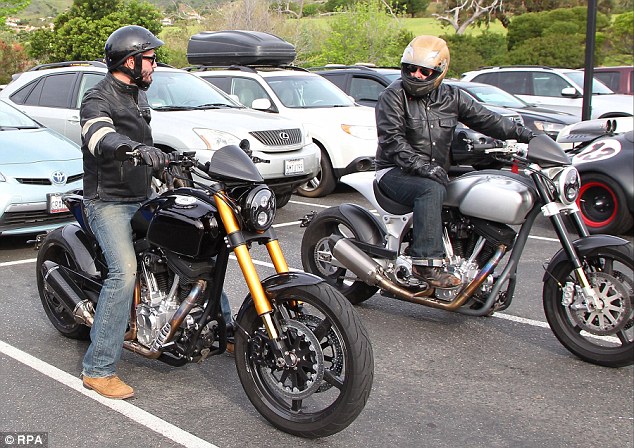
He is, on the other hand, more than happy to talk with you about the Arch Motorcycles KRGT-1 superbikes which he makes with his longtime friend, Gard Hollinger, a revered designer in the motorcycle world. These motorcycles are based on a prototype Hollinger made for Reeves years ago; each of the 2,032cc, V-twin-engine beasts are made to order in Hawthorne, Calif., an hour south of Los Angeles.
Reeves is known for his love of Norton motorcycles, but he also has owned Suzukis, BMWs, Kawasakis, and a 1984 Harley Shovelhead.


“Building that [first] bike is where we got to know each other,” Reeves said in July during an interview at their shop. Unlike most experienced riders who started riding from a very young age on dirt bikes, scooters, and Groms, Keanu learned to ride as an adult. But he has already logged tens of thousands of miles on the backs of Nortons, Suzukis, a 1974 BMW 750, a Kawasaki KZ 900, a 1984 Harley Shovelhead, and a Moto Guzzi racer—all from his own personal collection.


Reeves first approached Hollinger in 2007 with the request to modify his Harley with a “sissy bar”—the backrest you can attach on the rear seat of a motorcycle so your passenger can lean back. Hollinger refused. “That wasn’t really my thing,” he told me with a wry grin. That’s when they started talking about building a completely new bike that would look beautiful and cruise, a gleaming silver prototype with thick tires and a gas tank curved like the fender of a Bugatti.

When Hollinger finished the bike, Reeves loved it so much he wanted more. A lot more—some for himself, and some to share with friends. He wanted to start a motorcycle company.
"Form doesn’t follow function,” Hollinger, left, said in L.A. His childhood in Hollywood and the Pacific Northwest gave him a unique view on design; he talks about welding aluminum the way a sculptor would describe clay. “They should exist together.”


“It was really riding the prototype that was the proof of the business concept, even though we didn’t know it,” Reeves said.

They never planned to start a company—he had commissioned the prototype just for laughs and long rides. But the bike was so fun, Reeves said, that he couldn’t get it out of his mind. That’s when he started bugging Hollinger to make more.

“It was this idea of a big V-twin, a long wheel base with modern grade suspension and the telemetry that Gard had designed and the ergonomics,” he said. “It was this package that I wanted from the first time riding that bike. I’d never ridden anything like that.”

“It has to make you giggle when you ride it"

Hollinger wasn’t convinced. His company, LA County Chop Rods, already generated plenty of business; the former motocross racer had developed a cult following of riders who loved his ability to coax beauty and power out of raw metals.

But Reeves the A-list actor wasn’t used to hearing “no.” He asked Hollinger three more times—after long dinners and booze-filled nights brainstorming how good it could be—before winning him over.
Reeves and Hollinger often dip out for 100-mile rides up the highway from their bike shop in Hawthorne, Calif.


“I told him, ‘OK, the reason we should do this is because the machine is amazing, and we’re going to die’ [anyway],” Reeves said, laughing. “Let’s make something.”

Hollinger finally agreed. He would design the bikes himself based on Reeves’s vision, and the actor would road test them. It took them three years between finishing the prototype and getting the final result to production. They called the company Arch because it "sounded good in the mouth," Reeves said: "Arches, doorways, bridges, beautiful, functional—it made me think of tunnels and bridges and connections and journey. It was the rider to the bike, the experience of riding a motorcycle, our relationship, the idea with connecting with the company and our client."

“The original bike was the result of Keanu expressing what he was hoping for in a motorcycle,” Hollinger said.

Practicality and extreme design are often mutually exclusive when it comes to expensive bikes (just look at the awkward angles of the extreme choppers that cruise up and down the 405 every weekend). But that is what Reeves wanted.

At least, that’s the official story for why two 40-somethings continue to spend countless hours and their own money building a brand. (Reeves declined to say how much, other than noting they have no outside investors.) But there’s a much simpler explanation: They’re searching for a feeling.

“It has to make you giggle when you ride it,” Hollinger says.
Each KRGT-1 is customized exactly to its owner, from the measurements of the handlebars to the engraving on the tank.

The Numbers

Arch has sold a handful KRGT-1s since 2014 (the guys won’t specify how many). Hollinger says he expects to make roughly 30 or slightly more a year—exclusivity is important.

The bikes are made of more than 200 individual parts, most of which he fabricates with a small team of workers in the Hawthorne shop. (Arch is possibly the first motorcycle brand to be completely assembled in L.A. since a company called Crocker made V-twins there in the 1930s.)

Each is bespoke to its owner, so speed and power specs are subject to change, but in general they weigh around 538 pounds and, at 121 hp, can cruise easily at 100 mph. With their six gears, scooped-out insides, ultralight carbon fiber wheels, and aluminum bodies, they’re heavier than, say, a 485-pound Ducati xDiavel S but much lighter than something like a 640-pound Harley-Davidson V-Rod. Their five-gallon gas tanks will take you 200 miles before a fill-up. Each requires a $15,000 deposit even before that $78,000 price tag.

Similar to buying a custom suit, buying your own KRGT-1 requires multiple sessions of measurements

“It’s a bike that’s really confident feeling going straight,” Reeves said, rattling off engine specs and power calibrations like a true gear head. “Our bike has a lot of torque—115 pounds—so whenever you get on the throttle, you really feel the pull and push of the motorcycle. It can turn and handle.”

If you see an Arch motorcycle on the road, you’ll know it in a second. They’re rounded at the front, with a dip in the middle for the single seat before curving up again at the rear. (This is a lone-wolf bike, no passengers allowed.) They have a single LED headlight and low, short handlebars. The rear Michelin tire is fatter than the front but not so wide as to distract; their reflective aluminum rear cowling makes them unmistakable at night.
Hollinger keeps his design studio as clean as a museum, which is no small feat when you're manufacturing motorcycles there.


Similar to buying a custom suit, buying your own KRGT-1 requires multiple sessions of measurements—Hollinger fits the pedals, the handlebars, and the seat angle to your exact size. The proprietary Arch suspension is also adjustable according to riding style and preference. Once you settle on your model, delivery time takes 90 days or so—the Arch billet aluminum swing arm requires more than 17 hours of machining alone—though most of that time is spent working with outside vendors for finishes such as custom paint, engraving, and metal finishes to personalize the bike for the customer.

In actual work time it takes only a couple weeks to build the bike. Then Reeves takes it out for a test drive.

“It has to work,” he said, laughing. “After that it’s aesthetics and feel and taste. The bike started off as a classic American big V-twin, but because of the way it handles and the ergonomics and the telemetry that Gard has designed, I feel like it’s in a new class of motorcycle which might be called a ‘performance cruiser.’”

Whatever you call them—that term is a new one—they’ll keep even the most experienced rider occupied. The bikes are not fat and low like a hog, nor are they flat-seated for extra passengers like a cafĂ© racer. For urban riding and highway cruising they hit the Goldilocks sweet spot: just right.


Better yet, they will hit 60 mph in the time it takes to read this sentence.

“We went for a ride a while ago, for 400 miles,” Reeves said. “I’m still thinking, ‘Let’s go ride, let’s do that again.’”
Reeves said he hopes the company can reach as many people as possible to build a community of Arch aficionados and collectors.  

Whollup! Whollup!! Whollup!!! Did anyone see that $78,000 tag? Let me sha mind my business....
Read More »

Wednesday, 3 August 2016

Abeokuta Bikers Converge 2016 in pictures (2)

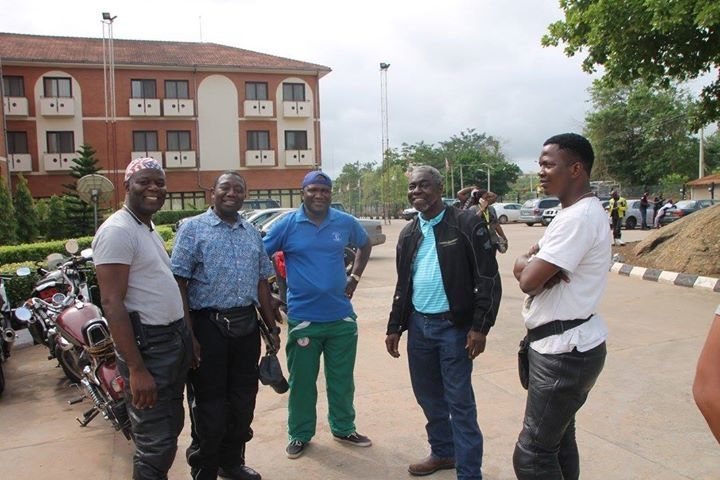
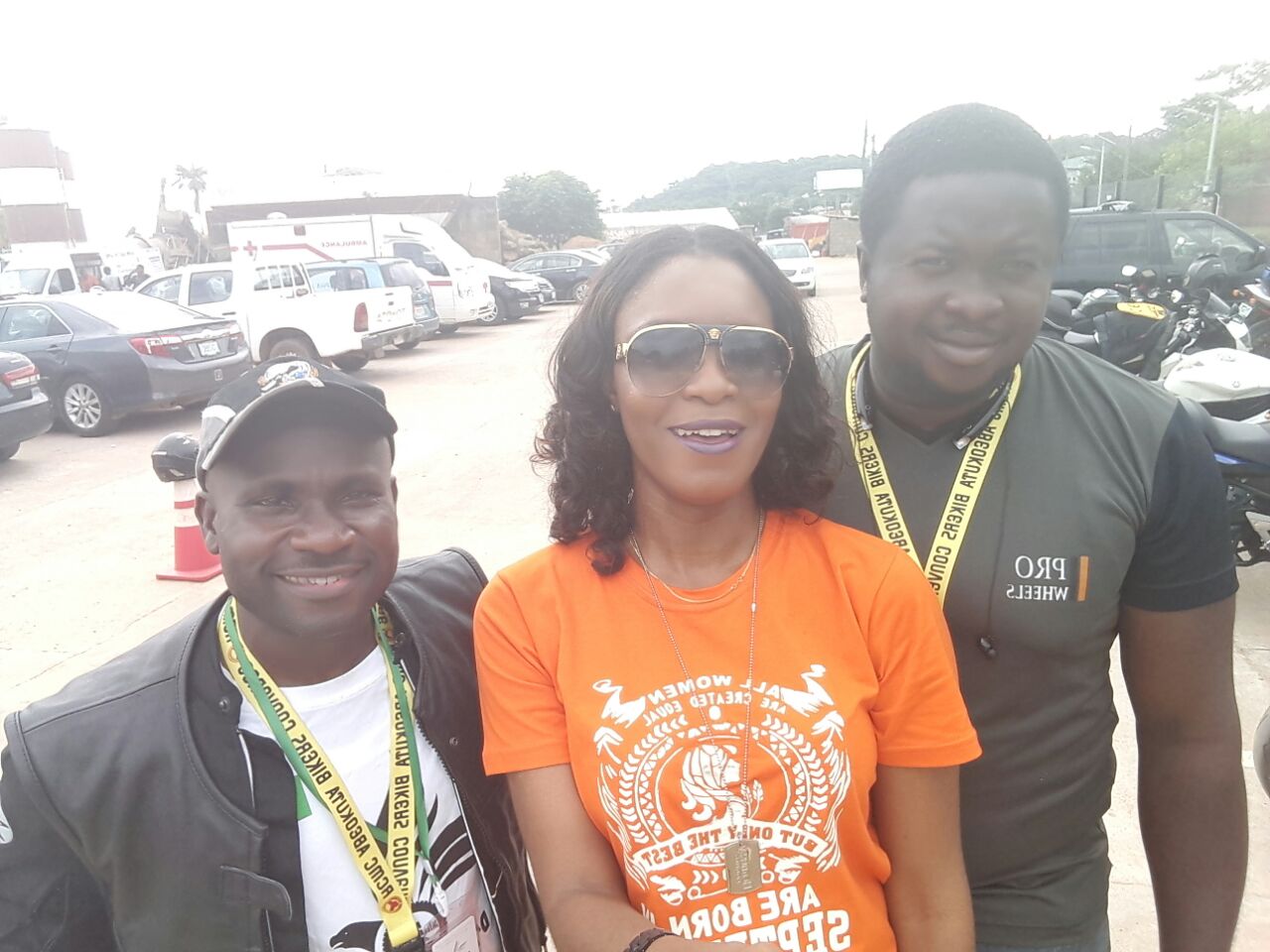
Ok so we decided to turn it up a notch and show more of the faces present at the Bikers converge 2016... Remember these are from people's private collection and aren't the official pictures. Henjoy... (in chi gurls voice).

So I decided to have a lil fun at the Buhari estate sign....


Read More »

Tuesday, 2 August 2016

Abeokuta Bikers Converge 2016 in pictures (1)

Ok so the annual convention of Nigerian bikers popularly known as the Abeokuta Bikers Converge has come and gone for this year, and boy was it lit or what? Venue was... Yea you guessed right. Abeokuta! But this year's event had a tang to it. I'd sit back and let the pictures speak for themselves. Remember this is part 1 and these are not the official pics.... Henjoy (in Falz voice).


Read More »

Thursday, 14 July 2016

Motorcycle Situational Awareness and Safety on the Street


Let’s say you’re an expert roadracer who learnt from the best riding school in obodo-oyinbo, with a shelf full of trophies. Will your ability to brake and corner to the extreme edge of control keep you from harm on the streets of Lagos? If you are quick to answer “yes” then you are decieving yourself.

Don’t get me wrong. Your highly advanced race and track skills can save your bacon when dealing with a curve that tightens suddenly or when you have to stop rapidly to avoid a collision. However, only a 'Johnny-just-come' relies on superior skills alone to arrive home unscathed because, unlike the obodo-oyinbo racetrack you learnt and practiced on, Lagos streets are not smiling, the hazards are unpredictable and less forgiving. You might get away with it enough to think you’re doing fine, but you’ll eventually face a hazard that even your awesome skills will not be able to handle.

What trumps badass cornering and braking talents is superior brain power that avoids the need to use those skills in the first place. Up first are strategies to deal with common hazards. You already have a lot of these strategies in your pocket. Some are so obvious that you might not even think of them as strategies. Examples include slowing down when approaching a busy intersection even if you have the green light, changing lane position to be more visible, weaving just enough to catch the attention of a driver waiting at the intersection, and covering your brakes to reduce reaction time, just in case.

Having expert-level control skills and smart strategies are great, but even they aren’t enough. Without situational awareness you might not recognize when a hazard is developing and fail to act in time. Situational awareness makes you alert to clues that allow you to “read” the environment and predict when a potentially bad situation is about to unfold before anything obvious actually happens. Unusual changes in traffic flow or the sight of unexpected brake lights can indicate trouble ahead.

The best riders have finely tuned, hi-def radar that can pick up subtle anomalies like a flash of sunlight off a windshield or the head and arm movements of a driver about to advance across your path. Scan the road ahead and ask yourself if the “picture” looks as it should. If not, then slow down and cover those brakes!

Situational awareness involves more than just your most familiar senses. It also includes your sixth sense. You know—that gut feeling you get when something just isn’t right. Developing your sixth sense takes a deeper level of awareness and conscious attention. Start by recognizing what your intuitive voice sounds like and pay attention when it speaks. Every time you listen to that little voice it makes it louder and clearer.

Situational awareness is critical when mixing it up with other drivers, but it also plays an important role even when it’s just you and the open road. Stay sharp so you can spot the often-subtle clues that help you identify a corner’s radius and determine whether conditions require a reduced entry speed or an altered cornering line. Does the surface camber slope away, reducing ground clearance and grip? What are the chances of sand or gravel or a rockslide around the corner?

Remember that superior cornering and braking skills are your second line of defense, not your first! Developing your physical skill to a high level will allow you to respond correctly and accurately if things go wrong. But believe me, your odds of a crash go way up if you think your physical skills alone will save you. Dulled attention leads to knee-jerk reactions and the need for heroic measures that might not save the day.

Your opinion counts... Leave us a comment below.
Read More »

Friday, 8 July 2016

Bigger tires and their effect on handling.

Over the holidays a rider bud and I got into a heated argument about motorcycle tires and their effects on handling, especially in a corner. Well here's how I (a science grad) sees it.

Friction does not depend on the area of the tire contact patch (when there isn't any water between the tire and tarmac); but a wider tire would help in maintaining contact over a far wider (pitch)angle. The width of the tires are dictated by the maneuverability that is expected of the bike,the turning radius and of course fuel efficiency.

Width of the tire would definitely help your cornering ability, however beyond a point it does not help. That point can be determined by the farthest contact point at the highest steering and roll angles.
As shown in the picture below with increase in the steering and roll angles(while cornering) the contact point on the tire will shift towards the left(away from the road surface). Therefore to maintain contact while turning sharper turns at a higher roll angle (higher speeds) you need wider tires.

A motorcycle is said to be in equilibrium(in balance) as it takes a turn when the centrifugal forces generated by taking the turn are negated by the lateral forces generated at the tires due to the camber of the tire. It is partly due to this reason it is generalized as an inverted pendulum.
The required lateral forces are taken care of during the design of the frame when the trail etc are determined.Since this doesn't concern our question I am going to skip the part.
The wheel's design is made considering that during cornering, the tire must maintain a contact patch with the road surface at all times.
where;
xPf = x-coordinate of the contact point of front wheel
yPf = y-coordinate of the contact point of front wheel

(a derivation of this maybe found in Motorcycle dynamics by Vittore Cossalter,I am not including it here as it would be a long thing)

If you can measure some of these parameters and substitute for the  maximum steering angle we could arrive at the contact point while the  motorcycle is executing its tightest turn. My wild hunch is the Duke's  tires aren't too wide but the motorcycle in the picture below would  probably be an overkill,but then its wheelbase is significantly larger:


To generalize, a motorcycle with a higher wheelbase and tires with bigger radius will need wider tires,this will also increase its turning radius and reduce maneuverability.
Where:
p = wheel base of the vehicle
ε = caster angle*
δ = steering angle
Φ= roll angle
Rc = turning radius
As you might have seen scooters can easily zip through traffic while motorcycles with higher wheelbase (eg: an Enfield) have a much bigger turning circle,in turn these are more stable due to the lateral force generated by their higher trails, but that is another story.

Picture courtesy:
Motorcycle Dynamics by Vittorio Cossalter,English edition
http://www.hdforums.com/forum/dy...
Read More »

Monday, 27 June 2016

Is listening to music while riding safe?


This is one question that never gets old. And for good reason. 

Experienced riders suggest the use of airplugs, as continuos wind-noise in your helmet can lead to loss of hearing. None-the-less is listening to music pushing it too far?

This is a personal opinion that you must decide on. When I first started riding I never listened to music (for about 3 months). Now I do listen to music. One day after listening to music for a while I thought maybe this isn't a great idea, I'll test it out by not listening to music on my commutes today. Because I commute on the 3rd Mainland Bridge, I came to the realisation that I can't hear squat over the wind and it is more detrimental to my hearing than listening to music with "in ear buds". Honestly I can hear my engine just as well with music, but it helps if you can access the volume to turn up and down in different situations. 

Hence the math equation below:

Riding with a whole lot of windnoise = fatigued.

Riding with earplugs = no wind-noise, but bored rather easily.

Riding with music (w/ inner-ear buds) = much more entertaining and energetic trip.

This is obviously just my opinion. I've found that over long distances, cutting out windnoise is prioritized, but with music playing, riding seems to be more based on instinct, and I feel less panicked when Danfos attempt to make a quick trip across lanes, or a big gust of wind hits.

I remember asking an experienced rider a while ago and getting this reply: It is safer without. That doesn't mean it's dangerous with. It can take some focus away from riding. I'd think if you need to ask if safe, then you probably aren't ready for the distraction. 

If you enjoy listening to music while riding, get this: Research shows that tuning in to your favorite jams can make you ride happier, harder, and faster. Music is scientifically proven to reduce perceived exertion, boost your energy levels, and increase your endurance by as much as 15 percent.

The world’s most prolific researcher on music and exercise, Costas Karageorghis, PhD, from London’s Brunel University School of Sport and Education, boils it down to this: “Music is like a legal performance-enhancing drug for athletes.”

If, however, you have "Who you 'epp" blaring so high that you can’t hear cars approaching behind you, another rider trying to pass you, or a barking dog coming straight for you, it can wreck your ride—and someone else’s—in a second.

Here’s how to stay safe and be civilized while rocking out on your ride.

Use one earbud. Unless you’re on your trainer, pull the left bud (which faces traffic) out of your ear and ride with just the right one in so you can hear cars, other riders, and your general surroundings. You don’t want to be taken by surprise by canines, deer, or vehicles, which can happen in even remote settings. If you’re a hopeless audiophile, you can buy single ear buds from companies like OneGood Earphones that are designed to mix both channels of stereo audio sound into a single earpiece, so you don’t miss a beat. 

Follow the 60/60 rule. Blaring music, even in just one ear, can be distracting and even damaging to your hearing. If passersby can hear Lil Jon screeching from your ears, it’s too loud. Most headphones' max volume is around 105 decibels. Normal talking is between 40 and 60 decibels. Ear health experts recommend keeping the volume on your player to 60 percent of max—the level of someone talking loudly—and limit it to about 60 minutes a day. Going longer? Just turn it down a notch.

Obey the rules. Many organized rides and races have rules against participating with music. Don’t be that guy who’s blissfully bopping along in ignorance. When the organizer says no ear doping, leave the tunes turned off.

Pluck those buds on social rides. Social rides by definition are rides where you’re there to enjoy the company of others. Wearing earbuds—even one—is a bit antisocial in these circumstances. Leave ‘em at home and enjoy the sights, sounds, and conversations of the ride.
 
Let us know what you think about riding with music below.

Read More »

Monday, 13 June 2016

Dealing with road rage!


Most riders in Lagos will agree with me when I say in Lagos we experience aggressive, inconsiderate, rude, uneducated, distracted, dangerous and plain incompetent drivers on the road everyday. However, does that call for road rage?  Hell no!

Motorcyclists are vulnerable road users and in road rage situations, we can easily come off second-best.

Road rage is violent, its immature, its offensive and yes its criminal. One could face serious charges. And with cameras in the vicinity , there may be some conclusive and damning evidence.

So what do we do when this truly immature and in-considerate driver gets in your face on the highway? 

Nothing!

Yea I said it... Sometimes we're full of vengeance and want to make this person feel as bad as you did. But really by doing that you put yourself in more danger. Banging on a door or windshield and smashing up his side mirrors don't make it go away. What he has done still stands. 

A friend of mine (Larry) was upset at someone's driving and rode up ahead to report to lastma officials who stopped the perpetrator to caution him. Now that is one way to go...

TIPS FOR HANDLING ROAD RAGE


    If you find yourself feeling unsafe as a result of the actions of another road user, the first priority is to remove yourself from the situation as safely as possible. Unfortunately far too often incidents of poor behaviour by one road user to another are only exacerbated when the ‘victim’ retaliates. If another party chooses to yell at you, beep their horn or flash their lights – so what? Let them get it out of their system and get on their way. Inflaming the situation by ‘biting back’ rarely assists, and often only makes the situation more unsafe for everyone.

    However if the other party continues to behave in a manner that makes you feel unsafe, then consider your environment. Perhaps pull into a service station, licensed premises or shopping centre. This will often discourage the aggressor from taking the matter further.

    If no such place is available, continue to ride at a safe distance without reacting to the aggressor until a place of safety is available to disengage from the situation as best and safely as you can.

    If you feel that you are in imminent danger, pull over or take a side street. I would have said call the cops at this point but we all know how that'll turn out.

    If you carry any kind of video recording device, ensure the footage is set aside so that it doesn’t get recorded over before being provided to an appropriate body. Make sure you don’t just secure the footage of the incident – also keep footage leading up to and beyond the incident to help clarify any potential counter claims by the other party that it was actually you that was the aggressor.

    If the situation is over, but you are still of the belief that the matter warrants investigation with a view to action by police, you always have the right to report it. You can either attend your nearest open police station to speak to someone, contact the general emergency  number which is 112 in Nigeria


    Be mindful, however that any complaint of an incident involving one person upon another without any supporting evidence is often difficult to successfully prosecute. Especially in Nigeria. A successful prosecution requires sufficient evidence being presented to a court to determine that an offence was committed 'beyond reasonable doubt'.

    However, this should not prevent you from reporting the matter, but is something to keep in mind if police determine there is not sufficient evidence for a matter to proceed. It doesn’t necessarily mean the police doesn’t believe you! If you provide the police force with a video recording you must be willing and able to give evidence.


Ride safe Pals...
Read More »

Tuesday, 7 June 2016

9 tips for staying comfortable on long motorcycle rides...


Pretty much any bike is comfortable for just a few minutes, but any bike can be torture if you have to spend hours in the saddle. Luckily, there are ways to address this. Below are a few tips on how to stay comfortable on long motorcycle rides.

1. Stretch


Stretch all your muscle groups before you ride. If you have the right riding gear — stuff that flexes with your body and allows full range of motion — you can even wear it while stretching.

If you took PE classes in secondary school, then you know how to stretch, the same techniques apply here.  Hold stretches for 30 seconds.

Start with your legs: touch your toes, spread your legs to twice shoulder high and and fold your torso down so your head points at the ground, then bend alternating knees, stretching the inside of your thighs. Stretch your quads by bending your knee while standing and pulling it up with your foot. Sit on the ground with the soles of your boots touching and do butterflies.
Your head and neck need attention too: roll your head around your shoulders. Stretch your back by reaching for the sky and your arms by pulling them behind your head and across your shoulders. All this gets you nice and limber for the hours in the saddle ahead.

2. Hydrate


Before you set out, drink water until you can't drink anymore. Then, top yourself up on the go. The goal is to urinate once every two hours, all day and for that urine to remain clear. If you’re off schedule or it starts turning dark, drink more. Riding a motorcycle, even just cruising down a highway in Nigeria, puts you outside in the elements, remaining adequately hydrated will prevent soreness from developing in your muscles and keep your mental acuity high. And we do mean water. Staying hydrated is better for energy and focus than sugary caffeinated drinks ever will be.

3. Dress Appropriately


No matter what the weather, there’s riding gear that will make you more comfortable in it. We all know what it can do in the rain and cold, but even in extreme heat, appropriate riding gear can allow your body to cool itself more effectively than simply exposing it to the wind. Ventilated or mesh gear controls the airflow around your body, giving the evaporative cooling effect time to work, rather than simply allowing the wind to blow the sweat off your body before it provides any cooling. There’s also cooling vests and other articles that soak up water, then keep you dry (they’re like diapers) while providing additional cooling. Or, you can just soak a scarf in water and achieve a cooling benefit from that too. You’ll also need to protect yourself from prolonged exposure to the sun.


4. Compress Your Muscles


Compression garments increase long term comfort and athletic performance by increasing the lymphatic and blood flow. It also holds muscles in place, isolating them from vibration, further preventing long-term soreness. A simple pair of bike shorts can work wonders over long distances and compression garments are now available for virtually your entire body. Wear them, they work.

5. Alter Your Ergonomics and Aerodynamics


Any stock motorcycle should only be considered an ergonomic starting point. This is as true for a Gold Wing as it is for an R6. You can achieve a surprising level of custom fit simply by rotating bars forward and backwards and levers up and down. Going further, you can fit different bars, different foot pegs and modify the seat to the taller, shorter, thinner, wider or to provide more padding or support.

The same goes for aerodynamics. A screen that works for one person, might create terminal vibration for another, seemingly identical rider. You can shim screen bolts, chop them down or purchase taller screens to tailor aerodynamics to your personal needs.

Find yourself on the road and in urgent need of a quick, easy ergonomic fix? Don’t be afraid to experiment. Duct tape, cardboard and spare clothing can be used to conjure up all sorts of comfort aids in a pinch.

6. Avoid Monkey Butt


Get a sweaty butt and you could experience chafing, or worse. This is what those skeepskin seat covers you see on GSs and Gold Wings are intended to prevent; they do so by helping air circulate around your backside. Duct taping a folded up towel to your seat can achieve a similar effect for free. I've heard people say talcum powder applied to your nether regions is a good idea too (never tried it).


7. Move Around


No matter how comfortable your bike may seem, sitting in one position for hours at a time is going to lead to sore-butt-itis. So move around. Be safe and don’t do this in places where you may need to make emergency evasive maneuvers, but long trips frequently see us sitting on the pillion seat, putting our feet on cylinder heads or other protruding parts or just standing up. The latter can help stretch your leg muscles and return blood flow to your back, feet and legs. Just be careful not to inadvertently tweak the throttle, foot controls or nudge the bars off course when you’re doing so. The gyroscopic force of the spinning wheels makes motorcycles extremely stable at highway speeds though, you can use that to your advantage.


8. Take A Break


There’s nothing wrong with just pulling over and taking a break. Go sit inside somewhere warm if it’s cold outside or cool if it’s hot. Drink some liquids; take your concentration away from riding and just chill out. The mental recuperation from even a short break might just be what you need to get home.


9. Finally! Exercise.


Much of the discomfort can be eliminated or at least minimized by strengthening your body even when you're not about to ride. Just as in riding horses, the motorcycle rider needs to be both strong and relaxed.

Core training can help a lot since by strengthening the core you can remove the pressure of holding up your body from your arms. Core training refers to strengthening the muscles that support the spine, muscles of the abdominals, the hips, and the back. A strong core also improves balance, which is always a good thing when riding a motorcycle.

Pilates provides a great core workout without the high impact risks associated with some other forms of exercise. After a few weeks of core strengthening you will find that you no longer get as fatigued in the seat as you did before.

During rides newer riders often tense up from fear or an attempt to improve their control of the motorcycle. Unfortunately, tension reduces the rider's control and speeds of the process of muscle fatigue. New riders should consciously think about relaxing every muscle in their body. In the beginning, take a mental inventory every ten minutes or so. If a muscle feels tight, force yourself to relax it and to breathe slowly and calmly. With time, your body will monitor itself, relaxing the muscles as they grow too tight. You can also help keep your blood flowing and avoid cramps by moving around. Stretch out your legs every so often. Turn your head and lean it from side to side to stretch your neck muscles. Shrug your shoulders and do some shoulder rolls. All these, keep the muscles loose.

After the ride, walk around for a few minutes. If you are taking a gas break or getting food, do a few lunges. Swing your arms around a few times. For many women especially a hot bath each night on long consecutive days of riding does wonders to relax the muscles, and prepare both the body and the mind for good sleep.

Finally finally, before, during, and after riding you must remain well hydrated. The experts say, by the time you feel thirst, you are on your way to being dehydrated. Dehydration causes aches and pains, it can reduce your awareness and your ability to make good decisions, and it can cause other serious and life threatening medical problems. Take time to drink plenty of water, not just on hot days, but everyday.

By spending some time to improve your fitness level you will avoid a lot of unnecessary discomfort while riding. Increased comfort means less distraction and that makes you a safer, better rider. And that is something we should all be aiming for. Isn't it?

Let us know how you stay comfortable in the comments section below...
Read More »

Thursday, 2 June 2016

Target fixation; Making it work for you!

Ever heard of target fixation? 

Target fixation is an attentional phenomenon observed in humans in which an individual becomes so focused on an observed object (be it a target or hazard) that they inadvertently increase their risk of colliding with the object. 

For riders this occurs when a rider locks his/her focus of attention onto something, such as a piece of roadside furniture (a lamp stand, for example) and by so doing, increases his chances of crashing into it. This is responsible for a lot more motorcycle crashes than we care to admit, yet when one considers the thinness of a lamp stand, the thinness of the motorcycle and the usually large amount of clear space around a lamp stand, one has to ask, how come the rider impacted perfectly into the obstacle and couldn’t swerve/ride around it? Simple, the rider locked on the obstacle and this "aimed" his/her motorcycle at it.

Actually it is something a bit more than simply looking at the obstacle. What "aims" the bike is the rider’s focus of attention. Because it's a focus it becomes the dominant message for the brain and, consequently, all riding actions "focus" on this message. This means that if you look with your direct vision in a direction that will enable you to avoid a pothole, but focus on that pothole with your peripheral vision, you are most likely going right into that pothole.

The object the rider focuses on doesn’t need to be anything as concentrated as a large post, either. If a frightened rider focuses on the side of the road while trying to round a corner he thinks he isn’t going to make, the most likely result is that the rider will run off the road and crash. Mostly this occurs when the rider is entering a turn a bit too fast, and finds himself looking at the spot where he’d run off, instead of through the turn.

Riding experts talk a lot about how to avoid target fixation, but it is really difficult to stop fixating on a target or ignore impending danger. However, target fixation is not necessarily a negative thing. You can use it for good instead of evil, like steering your bike toward a corner exit, or around an obstacle.

Have you ever gone into a corner too hot? Yeah, all the time, right? What happens next is you tend to look at where you think your bike is going to go and that becomes a self-fulfilling prophecy. Be it positive or negative...

But what if you shift your gaze toward a more appropriate target? Say, for example, the exit of the corner. Chances are your body will shift stance slightly and you will steer toward the proper exit.

This is the main reason MotoGP riders always have their heads at a particular angle in curves.  

 
Notice Jorge's focus.


Notice where his eyes are focused.


It’s all about picking another target. One that is not going to end in tears. I’ve done it on several occasions to avoid danger, but it takes a bit of practice.


Red line: Wrong focus. Blue line: Right focus.

During one of your solo rides, pick a spot on a quiet stretch of road and find something like a mark on the road to act as your “obstacle”. Then find something nearby to refocus on.

Ride by and focus on hitting the first target. It won’t be difficult to hit it. Then ride by and focus on the first target, but refocus on the new target and w
atch your bike react.
 
This phenomenon isn’t peculiar to only motorcyclists. Drivers target-fixate too, although drunk and mentally fuzzy/tired drivers are more prone to this than alert and well-rested drivers. However, it can happen to anyone who finds themselves sitting back enjoying the ride when they're driving.

This is one reason emergency response tend to park their vehicles in such a way as to protect themselves and the scene on limited-access highways. It is not uncommon for drunks to target-fixate on the flashing lights of cop cars or ambulances and plough right into the back or side of the emergency response vehicle! This is a phenomenon well-known to cops, fire-fighters and EMS people.

This also helps to explain why American motor officers are trained to mount and dismount on what most US riders would consider to be the wrong side of the bike. When you're parked on the side of a busy road, it's safer to get on/off the bike from the right, since the moving cars are on the left side. 

Let us know how you combat target fixation in the comments section below...

Read More »